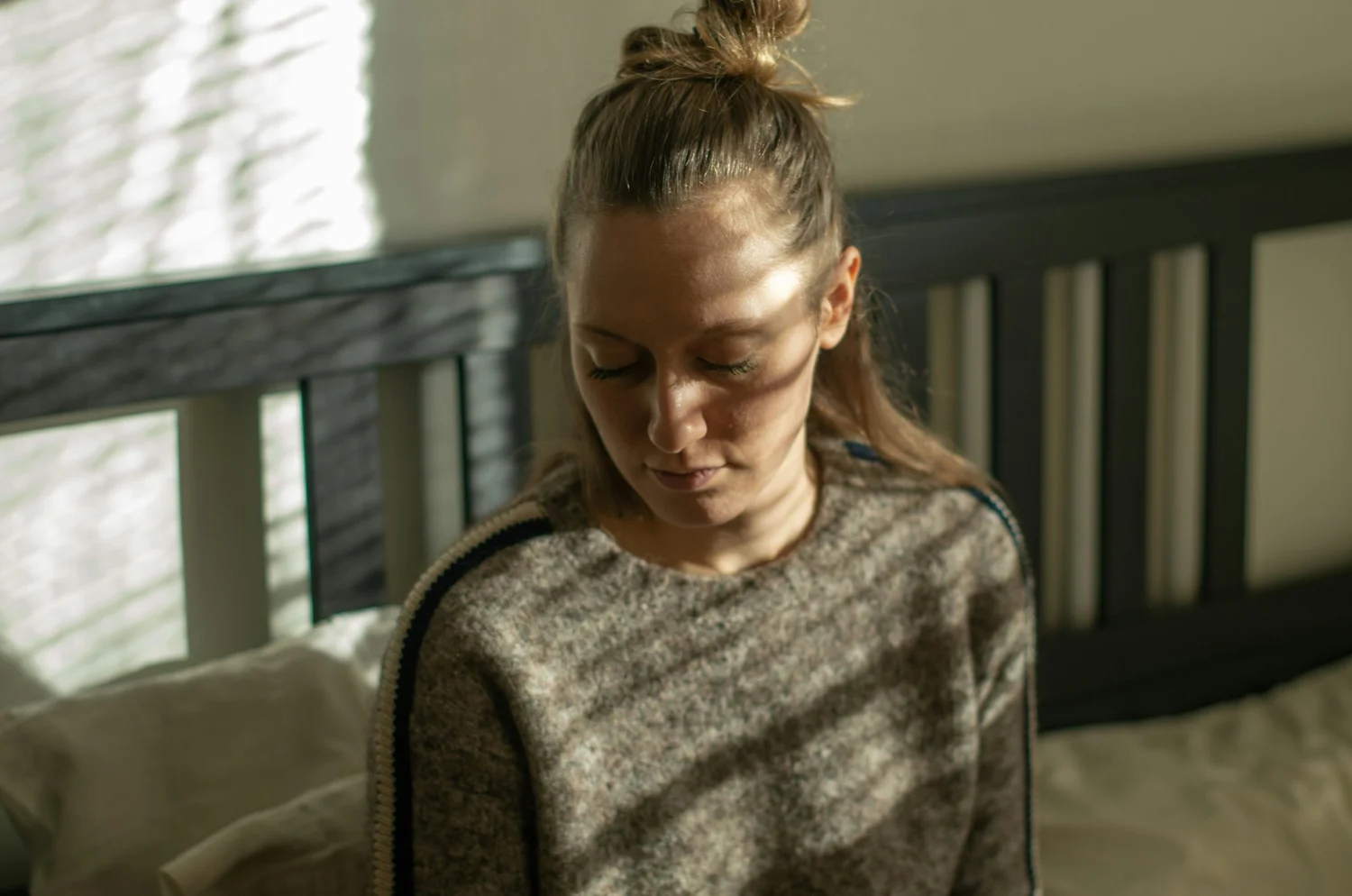
There are people who sit across from me and say some version of the same thing: I've done the work. I've talked about it for years. And I still don't feel better.
That experience — working hard in therapy and still feeling stuck — is more common than most people realize. It's also one of the clearest signals that the nervous system needs to be part of the conversation.
At Aspen Counseling, that's the territory I work in.
My path to this work
Before I trained as a clinician, I studied the sciences at a research university and spent years immersed in visual art. I continue to practice as an independent watercolor artist today. I bring both of those sensibilities to my clinical work: a rigorous curiosity about how things actually function, and a deep attentiveness to texture, nuance, and what's present beneath the surface.
I've worked in some of the most demanding clinical settings there are — intensive youth services, crisis mental health, wilderness therapy, juvenile detention, the adult jail system, and a secure psychiatric facility. That breadth shaped me. I learned to work with people whose nervous systems had been pushed to their limits, and to do it in ways that were genuinely steadying rather than re-activating.
I'm also a 500-hour certified yoga instructor with 300 hours of specialized training in Trauma Center Trauma Sensitive Yoga (TCTSY), and I hold a CADC-R certification in substance use. I'm currently completing advanced-level training as a Somatic Experiencing practitioner — a trauma resolution approach developed by Dr. Peter Levine specifically for what happens when the nervous system gets stuck after overwhelming experience.
There are a few common misconceptions about somatic work, and I notice that most people think it is simply about "listening to your body." True somatic work honors the ways in which we each uniquely experience the world and supports integration of our whole self, including thoughts, feelings, and sensations within the body. No one has to be a very "body-centered" or "mindful" person to benefit. I often find myself explaining that being regulated does not mean being calm at all times. Regulation is the ability to respond appropriately to what is happening.
I only use approaches I've experienced firsthand and formally trained in. That matters to me — and I think it matters to the people I work with.
Who tends to do well working with me
People who were high-functioning — until something happened
Maybe it was a medical crisis, a car accident, or an assault. Maybe it happened recently, or maybe it was years ago and you're still not back to yourself. You might look fine on the outside while quietly struggling to feel stable, present, or like you anymore.
This is the profile I work with most. These aren't people who are fragile or unfamiliar with hard work — they're often the opposite. The challenge is that the kind of resilience that carried them through before doesn't seem to be working the same way now. That shift often has more to do with the nervous system than with mindset, and that's exactly where Somatic Experiencing works.
People navigating concussion, TBI, and persistent post-concussive symptoms
I receive referrals specifically for this population. When symptoms persist — cognitive fog, sensitivity to stimulation, disrupted sleep, emotional dysregulation — and standard medical approaches have plateaued, a nervous-system-informed approach can offer meaningful support alongside other care. This isn't instead of your neurologist or physical therapist. It's a complement to what they're doing, addressing what medicine often can't reach.
People living with chronic pain and autoimmune conditions
Conventional treatment focuses on the body's signals in isolation. But chronic pain and autoimmune conditions are also nervous system phenomena — and the relationship you have with your pain matters clinically. Using yoga-informed approaches, I work with clients to develop interoceptive awareness: the ability to notice and relate to internal body sensations in new ways. For many people, this shifts something that years of other treatments couldn't touch.
People who've hit a wall in previous trauma work — or been re-traumatized by it
Some trauma-focused therapies, despite being well-intended and evidence-based, move too fast for certain clients. If you've experienced re-traumatization in a previous therapeutic relationship, or if you've done significant trauma work without the progress you hoped for, a slower, more titrated approach may be what's actually needed.
I work particularly well with clients who present with dissociation and freeze-dominant nervous system states — where the work isn't about processing more, but about steadily building the capacity for nervous system flexibility first.
Young adults navigating identity, transition, and the weight of early trauma
The compounding effect of identity development, major life transition, and trauma is its own kind of complexity. I work with young adults who are motivated to engage deeply and are looking for a clinician who will offer both genuine support and real challenge — someone who takes them seriously.
What this work actually looks like
Sessions with me tend to be slower and more body-oriented than what most people associate with therapy. Some sessions may feel slow, some may feel more intense, and some may even feel quite fun. We use movement practices to deepen the experience, not just to provide grounding at the very end of a session. We pay attention to what's happening in your nervous system in real time — not as a theory, but as a lived experience in the room. Over time, that practice builds capacity.
Coming from a multicultural background, I also hold real respect for the many different ways people understand healing and resilience — your frame matters, and I'll meet you in it.
Those I work with typically describe me as bringing a grounded, calm, and enthusiastic presence. That combination — steadiness and genuine energy — tends to feel different from what many clients have encountered before.
Is this the right fit?
I'm available for new clients at Aspen Counseling in Sisters, Oregon. My work is particularly well-suited for adults and young adults dealing with:
- Post-traumatic stress following a life-altering event, such as an accident, an assault, or a medical crisis
- Persistent concussion or TBI symptoms not resolved by standard care
- Chronic pain and autoimmune conditions, for people open to a different relationship with their symptoms
- Dissociation and freeze-dominant nervous system presentations
- Substance use in the context of unresolved trauma
- Stalled progress or re-traumatization from a previous therapeutic approach
- Young adults navigating identity, transition, and early or recent trauma
If any of this resonates — for yourself or someone you're supporting — we'd be glad to talk about whether it's a good fit. Call us at (541) 872-3772 or request a consultation.
- Somatic Experiencing
- Trauma-sensitive yoga
- Chronic pain
- Concussion and TBI
- Dissociation